
Coffee Color Sorter Buying Guide
8 minute read | written by Julian Mamaj
TABLE OF CONTENTS
Coffee Color Sorter Buying Guide: Why Carry-Over Rate Matters Most
Quick answer: A coffee color sorter uses cameras and air jets to eject visual defects — quakers, burnt beans, insect and water damage, light stones — that a density-based destoner can't catch. When you're comparing machines, the number that matters most isn't top speed or camera resolution.
It's carry-over rate: how much good coffee the machine falsely rejects while removing the bad. A little carry-over is unavoidable, and it's almost always worth the trade.
For smaller roasteries with forgiving lots, an entry-level sorter can be a fair value.
For serious operations — roughly 40 tonnes a year or more, expensive lots, or a tight production schedule — the deciding factor shifts from sticker price to time-to-full-performance, and a machine like the SOVDA Pearl Mini, installed and calibrated on your coffee with hands-on training, is the way to go. This guide explains why.
What a coffee color sorter does
A color sorter inspects every bean as it falls past high-speed cameras. When a bean's color or shape falls outside the profile you've set, a puff of air ejects it into a reject channel. Everything else continues into your good-coffee bin.
That's the key difference from a destoner, which sorts by density and catches heavy material like stones. A color sorter sorts by sight, so it removes defects a destoner physically can't: quakers (underdeveloped beans that never brown), burnt or scorched beans, and — on green coffee — insect damage, sours, and blacks. The two tools do different jobs and work best together.
The metric that actually matters: carry-over rate
Most spec sheets lead with throughput (kilos per hour) and camera specs. Those matter, but they're not where sorting succeeds or fails. The number that decides whether a sorter is worth owning is carry-over rate — the share of good, sellable coffee that gets thrown out along with the defects.
Think of it as the "collateral damage" of sorting. A machine that ejects every defect but also dumps 15% of your good coffee into the reject bin is an expensive way to shrink your yield. A machine that removes the same defects while losing a fraction of a percent is doing the job you actually bought it for.
How to read a carry-over spec
A carry-over figure only means something if it tells you what was measured and under what conditions: at what throughput, on what kind of lot, with what defect load, and whether the ratio counts beans, weight, or something else. A bare ratio with none of that context isn't a spec you can compare — it's a marketing number. When a vendor quotes carry-over, ask for the measurement conditions. If they can't state them, treat the number as undefined.
Why some carry-over is unavoidable
Here's the part cheaper marketing tends to hide: you will never get carry-over to zero, and any machine that promises otherwise is overselling. Coffee is a natural product. Beans are uneven in size, shape, and density, and that makes them hard to control at speed. Two things happen in every sorter:
- Bouncing. Beans don't fall in a clean single file. They collide, deflect, and bounce — and a good bean can bounce into the reject stream on its own.
- Proximity ejections. When a defect and a good bean fall side by side, the air jet fired at the defect can catch the good bean right behind or beside it. The machine made the right call on the defect; the neighbor was just in the way.
This is physics, not a flaw. The faster you run and the messier the input, the more it happens. That's why input matters too — a color sorter fed clean, destoned, evenly-flowing coffee carries over far less than one fed straight from a chaotic hopper.
The trade-off, stated plainly
The honest way to frame carry-over is as a trade, not a loss. Every batch, you're weighing a small amount of falsely-rejected good coffee against the cost of leaving quakers, burnt beans, and stones in the bag. For a specialty roaster, that's not a close call: a single quaker can flatten a whole cup, and one stone can chip a customer's grinder or a café's burrs. Losing a handful of good beans to protect the entire batch's quality — and your reputation — is a trade most quality-focused roasters take every time.
Well-set-up specialty sorting typically lands total reject rates in the low single digits (often around 0.5–2%, depending on how defective the lot is), with carry-over a small slice of that. The goal isn't zero rejects. It's rejecting only what you decide should go, with as little good coffee lost as possible.
The hidden cost nobody puts on the spec sheet: your time
Before comparing machines, be honest about what your hours are worth. In a roastery, your time is the most expensive asset you own — and an under-performing sorter spends it in two ways:
- Time to get running. A machine that ships without installation, calibration, or training doesn't start working when it arrives. It starts working when you find the days to assemble it, learn it, and tune it — often months later, often never fully. Every week in the crate is a week you paid for a machine that isn't sorting.
- Time re-doing the machine's job. A poorly tuned sorter forces a choice between two losses: run batches again to recover good coffee from the reject bin, or hand-pick defects the machine missed. Either way, you're paying skilled labor to re-sort coffee you bought a machine to sort. Do that weekly and the "savings" on a cheaper machine evaporate within the first year.
This is why time-to-full-performance belongs next to price on any serious comparison. A sorter that arrives, gets installed and calibrated on your coffee, and runs correctly from day one is cheaper over its life than one that costs half as much and quietly bills you in hours.
How to evaluate a sorter (beyond the spec sheet)
When you're comparing machines, weigh these over headline speed:
Control. Can you set exactly what stays and what goes, or are you stuck with the factory's idea of a defect? The best sorters give you both an automatic mode and full manual control, so you can dial thresholds to your coffee and your standards rather than a generic profile.
Calibration to your coffee. A sorter tuned on a factory floor with someone else's beans will carry over more on yours. A generic AI preset trained on "good beans and bad beans" in the abstract is not the same as a machine dialed in to your actual lots. Calibration at your roastery, on your coffee, is what pulls carry-over down.
Speed vs. accuracy. Higher throughput usually means more bouncing and more carry-over. Ask what the accuracy figures look like at the speed you'll actually run, not at an idealized rate.
Setup, training, and support. This is the most underrated line item. A sorter is only as good as its configuration, and configuration is a skill. Ask whether on-site installation, calibration, and hands-on training are included — or whether setup is self-service and support is online-only. Machines that ship with hands-on setup start earning their keep on day one. Machines that don't often sit in the crate for months while an already-busy team tries to find time to assemble and learn them — and when they finally run, they run under-tuned, at lower ROI.
Availability. A sorter on pre-order can't protect the harvest you're roasting now. Check the actual lead time — "in stock" and "available soon" are very different promises when your production schedule depends on the machine arriving.
Who's behind it. Buying from people who actually roast, cup, and run roasteries tends to mean better defaults, better support, and advice framed around your coffee rather than around a spec sheet.
Which machine fits your roastery?
There's no single right answer — the honest one depends on your volume, your lots, and your schedule.
A cheaper machine can be a smart choice if you're a smaller roastery, need a quick fix, or are sorting more forgiving coffees. When your lots aren't especially expensive, a little extra carry-over doesn't cost much, and when you have time in the day to assemble, tune, and babysit a machine, you can absorb its rough edges. For that situation, an entry-level sorter can deliver real value for the money.
If you're a serious roastery — roasting 40 tonnes a year or more, running expensive lots, or working on a tight production schedule — the Pearl Mini is the way to go. At that scale the math changes. Falsely rejected coffee is real money, downtime is worse, and your team's hours are the scarcest resource in the building. The machine has to arrive, and work — period: in stock, installed on-site, calibrated to your actual lots, with your team trained and confident from the first week rather than months later. That's what the Pearl Mini is built and supported to do, and it's why we designed the whole offering — on-site installation, calibration on your coffee, hands-on training, and coffee-people support — around time-to-full-performance rather than sticker price. Buying under-spec to save money up front is how a "cheap" machine becomes the most expensive thing in the roastery: you pay for it once at the invoice, and then again every week in setup time, re-sorting, and lost good coffee.
What a color sorter costs
For a specialty roastery, a complete sorting solution generally runs $35,000–$55,000, depending on configuration and whether you add a destoner for a full green-to-roasted line. Cheaper import machines exist, but they're often built for commodity throughput rather than specialty precision, and they typically leave setup, calibration, and training to you. Factor the total cost of ownership — install, training, support, and how fast the machine reaches full performance — not just the sticker.
The bottom line
A color sorter doesn't promise magic. It promises control — a tool that lets you decide exactly what ends up in the bag. Judge machines on carry-over rate, on how carry-over is actually defined and measured, and on how fast the machine reaches full performance in your roastery. Accept that a little carry-over is the natural cost of protecting a whole batch. And if you're roasting serious volume or serious coffee, buy the setup that works from day one — because the most expensive sorter is the one that makes you do its job for it.
FAQ
What is carry-over rate in coffee sorting? Carry-over rate is the percentage of good, sellable coffee that a color sorter falsely rejects while removing defects. It's the most important metric when comparing sorters, because a machine that removes defects but wastes a lot of good coffee erodes your yield.
Is zero carry-over possible? No. Coffee is a natural, uneven product, and at sorting speed beans bounce and collide — a good bean can deflect into the reject stream, or get caught by an air jet aimed at a defect beside it. Some carry-over is physics. The goal is to minimize it, not eliminate it.
How do I compare carry-over claims between machines? Ask what was measured and under what conditions: throughput, lot type, defect load, and whether the ratio counts beans or weight. A defined figure measured at your running speed is comparable; a bare ratio without conditions is a marketing number, not a spec.
Is carry-over worth it? For specialty roasters, almost always. Losing a small amount of good coffee is a fair trade for removing quakers, burnt beans, and stones that would otherwise ruin cups, damage equipment, or hurt your reputation.
How do I reduce carry-over rate? Feed the sorter clean, destoned, evenly-flowing coffee; calibrate the machine to your actual lots rather than a factory default or generic AI preset; run at a speed that matches your accuracy target; and get proper setup and training so the machine is tuned from day one.
Does a color sorter replace a destoner? No. A destoner sorts by density and catches heavy stones; a color sorter sorts by sight and catches visual defects a destoner misses. They do different jobs and work best as a pair.
When is a premium sorter like the Pearl Mini worth it? When you roast around 40 tonnes a year or more, run expensive lots, or can't afford downtime or months of self-service setup. At that scale, time-to-full-performance and support determine ROI far more than sticker price — an under-tuned budget machine costs you weekly in re-sorting and lost good coffee.
How much does a coffee color sorter cost? A complete specialty sorting solution typically runs $35,000–$55,000 depending on configuration and whether a destoner is included. Cheaper machines usually shift setup, calibration, and training costs onto the buyer.
Latest blog posts
Visit the blog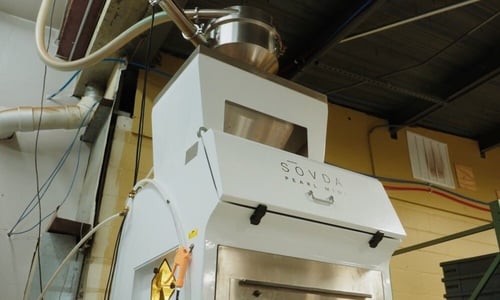
What is a color sorter machine for coffee?
For most roasters, the second half of 2024 was marked by one thing above all else: an unprecedented increase in the C price. Just over four ...
What Equipment Do You Need to Start a Coffee Roastery? 2026 Guide
Quick answer: To start a specialty coffee roastery you need, at minimum, three things: a roaster, a destoner, and a weigh-and-fill packing ...
Better coffee awaits
Chat with our team to learn more about what SOVDA can do for you. Whether you want to refine your production or grow your business, we can help. Get in touch to perfect your roastery.