Quick answer: Beyond the roaster, the one piece of coffee roasting equipment you need to start a specialty coffee roastery is a packing machine. Time is money, and in your first year it belongs to selling coffee, not to standing at a scale. Everything else can follow, usually in this order: a destoner that conveys straight into your packer, then a color sorter to catch the defects, and a blender last.
Most people starting a roastery spend nearly all their energy choosing the roaster and almost none on what happens after the beans come out. The roast is where the craft is. But the roaster is rarely what holds a young business back. What holds it back is everything downstream: hours lost to hand-weighing bags, buckets carried across the floor, and machines bought one at a time that never fit together.
This guide walks through roastery startup equipment by workflow, quality, and scale. It covers what to buy first, what comes next, and what can wait. We build the post-roast line, so that's where we go deepest.
Coffee roasting equipment: the order to buy it in
| Step | Equipment | Why it's in this spot |
|---|---|---|
| Before you open | Commercial coffee roaster | Where the flavor is made. Choose it with a roaster specialist. |
| 1. Day one, period | Weigh-and-fill packing machine | Gives you back the hours you need to sell coffee and build accounts. |
| 2. Next | Destoner that conveys to your packer | Takes stones out and ends bucket-carrying in the same step. |
| 3. Then | Coffee color sorter | Catches the quakers, burnt beans, and defects a destoner can't see. |
| 4. Usually last | Coffee blender | Pays off once you run regular blends at volume. |
The rest of this guide explains why that order works, and why the packing machine can't wait.
Start with the line, not the machine
Roasteries are usually built one purchase at a time. You buy the roaster, sort out packing when orders pile up, and bolt on a destoner after a scare. Each piece is chosen on its own, and none of them fit together. You end up with a floor full of machines and a team carrying buckets between them.
The leaner way, and the cheaper one, is to plan the whole line first, even if you buy it in stages. How does coffee get from the roaster to the bag? If you know the shape of the finished line on day one, every purchase slots into it. That's lean roasting in one sentence: build for flow, not for a pile of machines.
The commercial coffee roaster: get expert help
The roaster deserves a specialist's input. Companies like Loring, IMF, Probat, ROEST, and Stronghold live and breathe roasting machinery. They're better placed than we are to match a roaster to your profile, fuel, and volume.
What we will push you on: plan the rest of your coffee roasting machinery at the same time. Your roaster sets your batch size, and everything downstream should be sized to match it.
Step 1: A packing machine, from day one
This is the one we won't compromise on. In the beginning, you need to sell, not pack.
Hand-packing feels free because nobody sends you an invoice for it. It's actually the most expensive time in your building. Every hour at the scale is an hour you're not calling cafés, pouring samples, building wholesale accounts, or improving your roast. Early on, those hours decide whether the roastery grows.
A weigh-and-fill machine buys that time back:
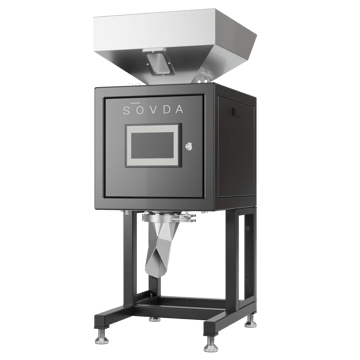
- Faster packing. The Precision Fill Mini fills 4–15 bags per minute, depending on bag size, and cuts packing time roughly in half compared to hand filling.
- Accurate bags. Every fill lands within ±2 g of your target, so you stop giving coffee away in overfilled bags and stop answering emails about short ones.
- One person, simple work. You hold the bag. The machine weighs, doses, and cuts off.
- Fast payback. Most roasters we work with see the Precision Fill Mini pay for itself in three to nine months.
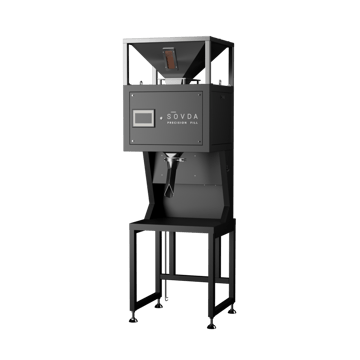
The Precision Fill Mini is a benchtop unit, so it fits a small startup space. When volume grows, the Precision Fill fills up to 18 bags per minute. Either way, coffee packaging equipment isn't a "later, once we're bigger" purchase. It's the machine that gives you the time to get bigger. More on this in how to scale coffee packing capacity.
Step 2: A destoner that conveys to your packer
Once packing is handled, a destoner is usually the next machine. Don't wait long for it.
Stones make it through even excellent green coffee. Send one into a grinder, yours or a café customer's, and the repair is the cheap part. The real cost is trust. A wholesale account that finds a stone starts questioning your whole quality process, and that doubt is hard to win back.
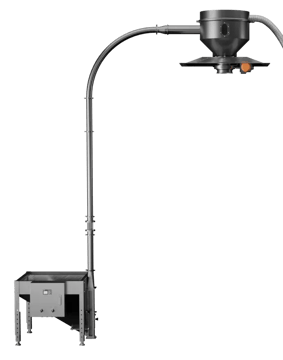
The smart move is to get a destoner that also moves the coffee to your packer. The SOVDA Lift with the Destoner Upgrade conveys roasted coffee into your Precision Fill Mini or Precision Fill and destones it on the way. One step, no extra machine on your floor, and nobody carrying buckets up to the packer's hopper. Every Lift hopper also has a magnet that catches metal like screws.
- Workflow: roaster to Lift to packer, with no buckets in between.
- Quality: stones and metal are out before coffee reaches a bag.
- Scale: the Lift conveys up to 500 kg of roasted coffee per hour, depending on setup, so it keeps up as you grow.
See the SOVDA Lift buying guide for hopper sizes and upgrades, or how vacuum conveying makes a roastery leaner.
Step 3: A color sorter to catch every defect
A destoner removes what's denser than coffee. It can't see a quaker, a burnt bean, or a visual defect. A color sorter can.
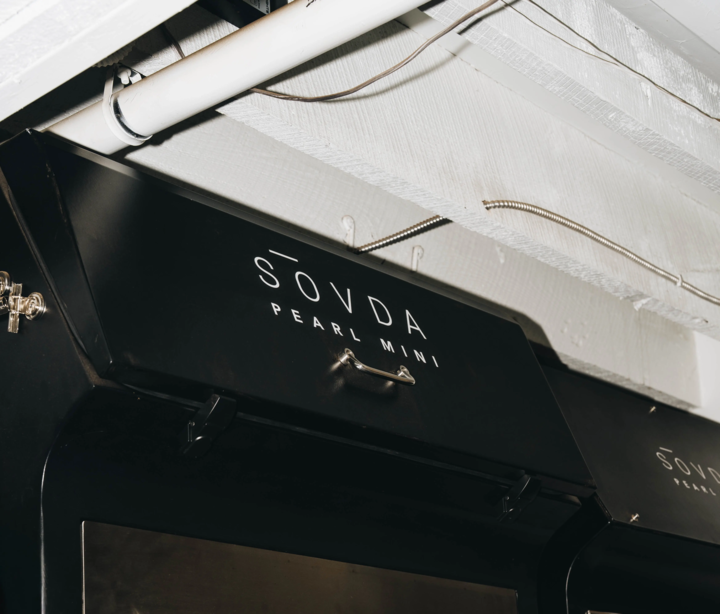
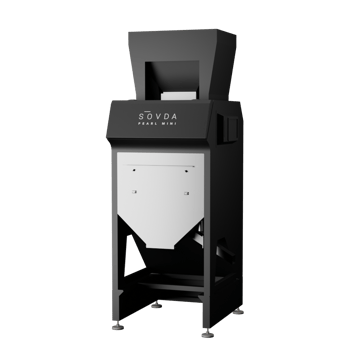
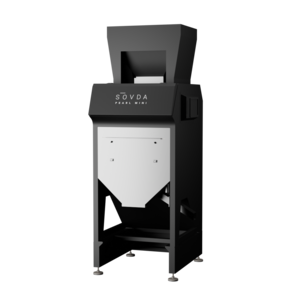
The Pearl Mini inspects every bean with dual 4K cameras and rejects quakers, burnt beans, and light stones. For a specialty coffee roastery, that means a cleaner cup, more consistent bags, and the confidence to buy more interesting lots. It drops into the same line: the Lift can convey from your roaster to the Pearl Mini, and from the sorter to your packer.
It's a real quality multiplier. It's also the step that makes sense once packing and destoning are running smoothly. Read our coffee color sorter buying guide and color sorter vs destoner for the details.
Step 4: A blender, usually last
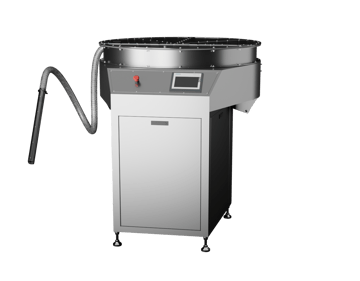
Blending by hand works while blends are small and occasional. Once you run regular blends at volume, a dedicated blender pays off. The SOVDA Blend mixes batches of up to 85 kg with repeatable consistency. Its built-in beanloader frees up your roaster and cooling tray, so roasting keeps moving while you blend.
That's why it's usually last: its value grows with your blend volume. Our guide to compact coffee blending covers when it's time.
Buy equipment that lasts, not stopgaps
The most expensive habit in new roasteries is buying cheap to "get started" and replacing it a year later. A stopgap costs you twice: once to buy it, once to replace it, plus the downtime and missed orders when it breaks mid-run.
Equipment built to last costs more up front and pays you back every month after. Buy once, and grow into it. A modular line helps here: start with a packer, add a Lift with a destoner, then add a sorter and blender to the same line when you're ready.
Frequently asked questions
What coffee roasting equipment do I need to start a roastery? A roaster and a weigh-and-fill packing machine. After that, add a destoner that conveys to your packer, then a color sorter, and usually a blender last. Plan the full line up front, even if you buy it in stages.
Do I really need a packing machine when I'm just starting out? Yes. It's the one piece of post-roast equipment you shouldn't open without. Hand-packing eats the hours you need to sell and grow. Most roasters we work with see a Precision Fill Mini pay for itself in three to nine months.
Why a packer before a destoner? Because time is your scarcest resource in year one. A packer gives you hours back every day you roast. The destoner comes right after, ideally one that conveys into the packer, so it also removes the bucket-carrying.
Is a destoner necessary for a small roastery? Yes, and it shouldn't wait long. A single stone can wreck a grinder and a wholesale relationship. A conveying destoner like the SOVDA Lift with the Destoner Upgrade removes stones and moves coffee to your packer in one step.
When should I add a color sorter? Once packing and destoning are running smoothly and you're ready to push quality further. A sorter like the Pearl Mini catches quakers, burnt beans, and defects a destoner can't see.
Which commercial coffee roaster should I buy? Choose it with roaster specialists such as Loring, IMF, Probat, ROEST, or Stronghold. Whatever you pick, size the rest of your line to its batch size from the start.
See how it works →
Get the next lesson
One short email a week on running a leaner roastery.
Protected by reCAPTCHA. Google's Privacy Policy and Terms of Service apply.